How to get lost keys back
Last updated
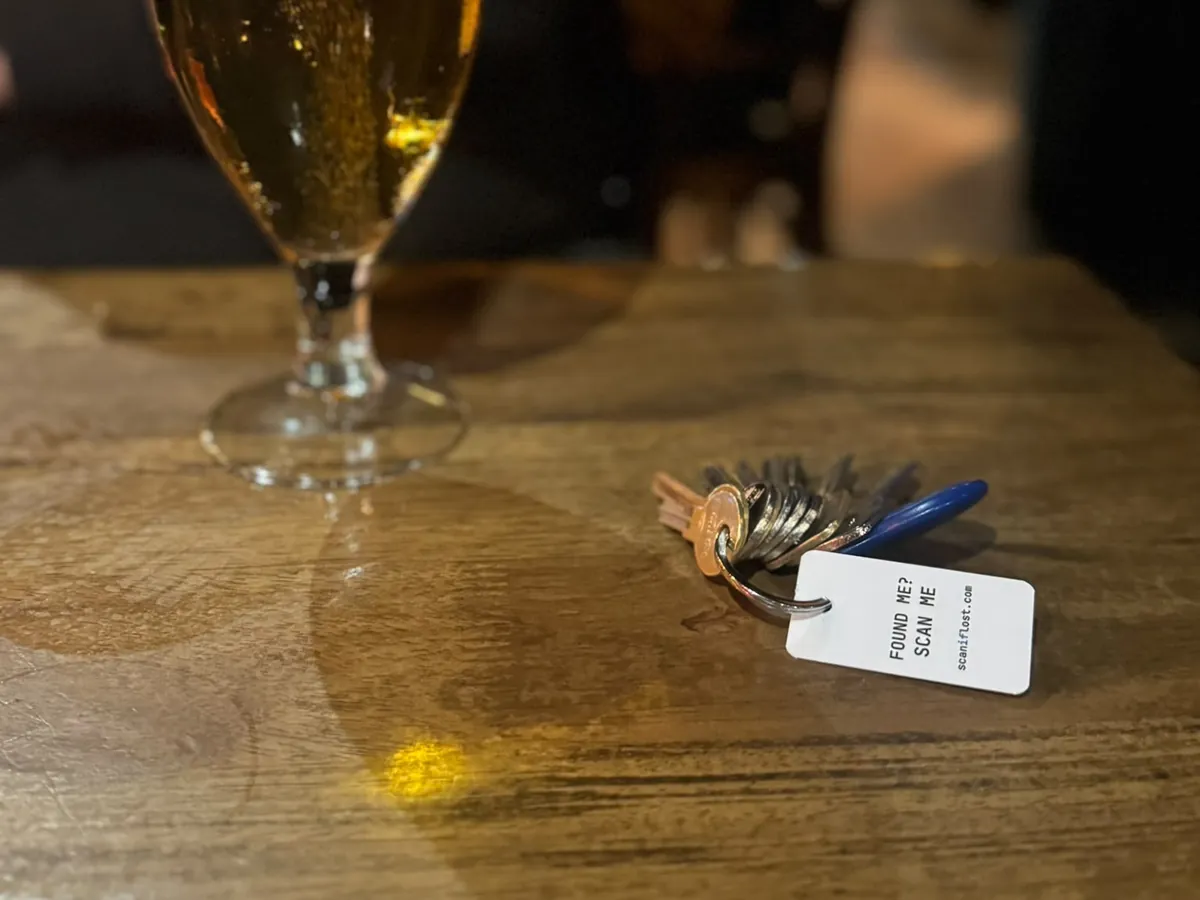
Retrace your last few stops, ring anywhere you've been, and ask the lost property office of any bus, train or taxi firm you used. Next time, put a QR key tag on the ring: whoever finds your keys scans it with their phone camera and messages you through scaniflost, without your name, number or address ever being on the keys.
If you've just lost your keys
Most lost keys turn up within a short distance of where they were last used. Work through these in order before you spend money on locks.
- 1Check the obvious places twice. Coat and bag pockets, the car, the door you came in by, the sofa and the bottom of your shopping. Ask whoever you live with to look as well; a second pair of eyes finds what yours skip.
- 2Retrace your last few stops. Think back to the last time you definitely had them, usually when you last locked or unlocked something, and go back over the places you've been since.
- 3Ring the places you visited. Cafés, pubs, shops, the gym and your workplace all keep things that are handed in. Ring rather than email: whoever answers can look behind the counter while you wait.
- 4Ask transport lost property. If you used a bus, train, tram or taxi, contact the operator's lost property office. Items are often logged a day or two after they're found, so ask again if nothing has come in yet.
- 5Report the loss online. Registering a lost item with a national lost property service means a finder who hands your keys in somewhere else can still be matched to you.
- 6Tell your neighbours. A message on a local community group or a note to the neighbours reaches people who walk the same streets you do.
Should you change the locks?
It depends on whether a finder could tell which door your keys open. If they were on their own, with nothing to say whose they are, the risk is low and many people wait a day or two to see if they turn up.
Change or rekey the locks straight away if the keys could lead somebody to your home: your address was on the fob, they were lost with a wallet, bag or post that shows where you live, or you think they were taken rather than dropped. A locksmith can usually rekey a cylinder for less than replacing the lock.
Car keys are a separate case. Many modern car keys can be removed from the car's list of keys by a dealer, so a lost one no longer opens or starts it. Ask before you pay for a replacement.
Why keys are hard to return
Somebody who finds a set of keys usually has no way of knowing whose they are. The honest options are to leave them where they are or hand them in somewhere and hope you think to ask there.
Writing your address on a fob solves the wrong problem: it tells a stranger exactly which door the keys open. A phone number is better, but it's still on show to anyone who picks them up, and it goes out of date when you change number.
How a QR key tag helps
A scaniflost key tag carries a QR code and nothing personal. Scanning it opens a page that says what the keys are, gives your first name, and lets the finder write to you. You're emailed as soon as it's scanned.
If your keys go missing, mark them lost in your dashboard and the page tells whoever scans it that you're looking for them.
Getting the most from it
- Name it clearly in your dashboard, like “Flat keys” or “Car and house keys”, so a finder knows what they're holding.
- Put one on each set you carry: house, car, work, bike lock.
- Spare stickers work on the things that travel with your keys, like a wallet or a phone case.
- Arrange the handover somewhere public, then mark the keys returned.
Questions
Is it safe to put my address on my keys?
It's best not to. An address on a set of keys tells whoever picks them up which door they open. A scaniflost tag carries only a QR code; the finder sees your first name and what the keys are, and nothing else.
Where do lost keys usually end up?
Usually close to where they were last used: a coat pocket, the car, a café or shop counter, or the lost property office of a bus, train or taxi firm. Honest finders tend to hand keys in to the nearest staffed counter, so ring the places you visited first.
Does the key tag need charging?
No. It's a printed tag with no electronics, so there's no battery to charge or replace.
What if the finder doesn't have a QR app?
They don't need one. Any modern phone camera reads the code and opens a normal web page.